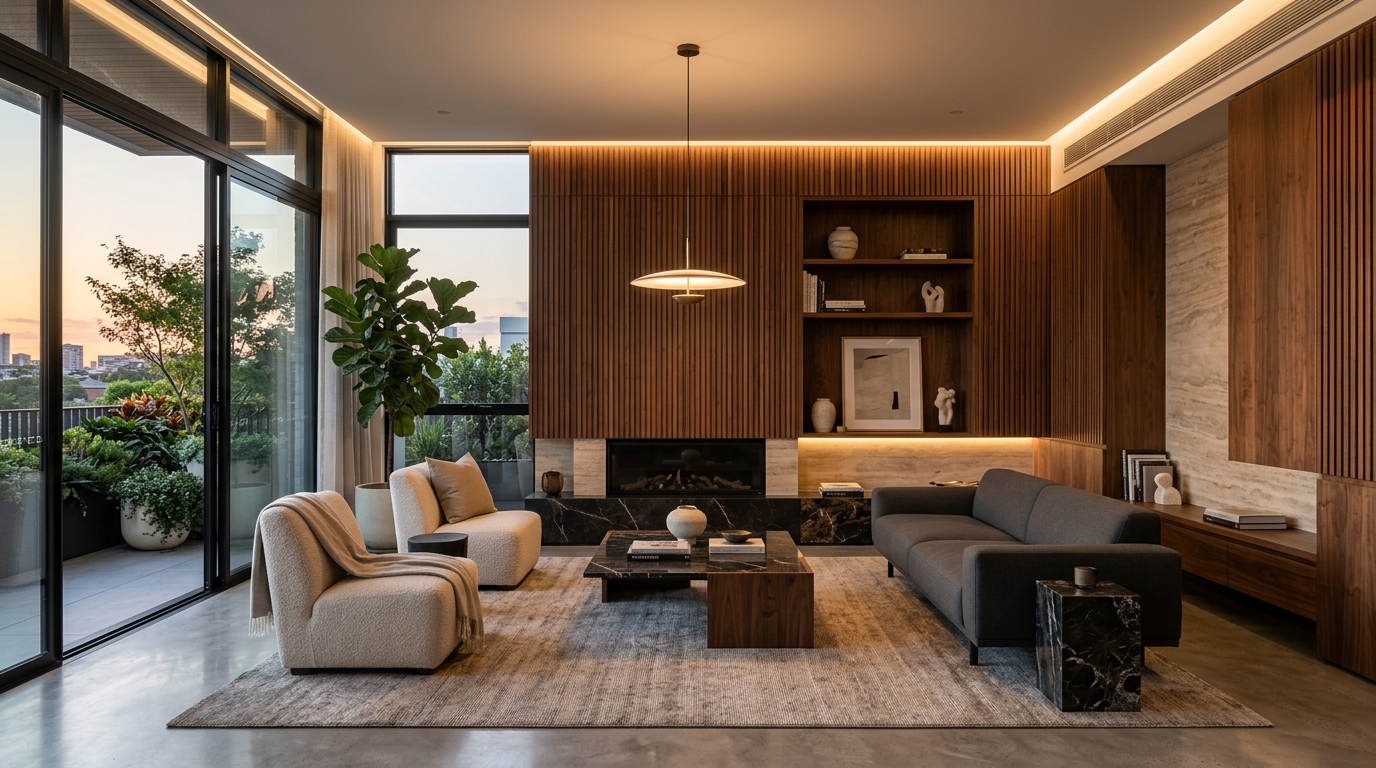
When this interior design company first spoke to Webstrike, they were not looking to restart digital marketing. They had almost stopped it.
They had already worked with other agencies. Leads were coming in, but the quality of those leads was creating a bigger problem than the number of leads was solving.
There were enquiries for ₹3 lakh and ₹5 lakh interiors, followed by heavy price negotiations. There were random enquiries with very little purchase intent. In some cases, they were even receiving enquiries from interior material suppliers.
The company had leads.
What they did not have was the right market reaching out to them.
So instead of starting with a campaign plan, we started with a business conversation.
The First Problem We Identified Was Not Digital Marketing
When we spoke with the company's management team, one thing became clear. They had already tried digital marketing. The problem was not that Meta could not generate enquiries. It could. The problem was the kind of customers those campaigns were attracting.
So before talking about campaigns, creatives or targeting, we studied the market they were operating in.
The company was primarily competing in the ₹4 lakh to ₹5 lakh interior segment across Trivandrum, Kollam and Kanyakumari. And that was where we found the bigger issue.
There was a large number of interior design companies competing in exactly the same segment. If the company continued positioning itself around the same price point, it would continue competing with a very large number of brands for customers who were comparing companies primarily on price.
That meant more competition. More negotiation. More price comparison. And ultimately, more pressure on project value.
Our recommendation was straightforward: If the business wanted ₹7 lakh, ₹10 lakh, ₹15 lakh and higher-value projects, it had to stop presenting itself to the market like a 3 lakh to ₹5 lakh interior company. The market had to perceive the brand differently.
The Conversation That Changed the Strategy
We presented this to the management team. The recommendation was to move the brand towards a premium interior design positioning.
The team agreed with the direction. But they had a legitimate concern: They had already worked with agencies before. What would stop this from becoming another cycle of campaigns, leads and disappointing follow-ups?
Our answer was simple: We were not going to start with lead generation. We were going to start with the brand.
Two and a Half Months Before the Ads
For roughly two and a half months, our work focused heavily on repositioning the brand. We looked at how the company presented itself, how it communicated its value, how it should be perceived by a premium customer and what kind of market it should compete in.
The objective was not to simply make the brand look more expensive. It was to create a perception that was consistent with the kind of projects the company wanted to execute.
The shift was from: “We do interiors.”
to: “We are a premium interior design company.”
That distinction influenced the communication, creative direction, messaging and eventually the acquisition strategy. Only after the positioning work was in place did we restart lead generation.
Then We Went Back to Meta
Meta remained the primary acquisition channel. But this time, we were not chasing the cheapest possible lead. The goal was to attract customers who were more aligned with the company's new positioning and project value.
And the numbers changed.
The earlier lead cost was approximately: ₹300 to ₹500
After the repositioning and new acquisition strategy, the average lead cost moved to: ₹800 to ₹1,500
The number of enquiries was lower. But that was expected. We were no longer trying to win the same volume-driven market. We were trying to enter a different one.
Fewer Enquiries. A Very Different Funnel.
This is where the results became meaningful. More than 90% of the generated leads were qualified based on the company's requirements. The leads that did not qualify were primarily enquiries from outside the target locations.
Among the relevant leads, the sales journey looked very different:
- 81.23% Lead to Site Visit: A significant majority of qualified leads progressed to a site visit.
- Approximately 80% Lead to Quotation: Around 80% of the qualified leads progressed to the quotation stage.
And most importantly, these were no longer predominantly ₹4 lakh or ₹5 lakh requirements. The project opportunities were now around: ₹7 lakh, ₹10 lakh, ₹15 lakh+.
The cost of acquiring the lead had increased. But so had the value of the opportunity.
This Is Why We Don't Look at CPL Alone
From a conventional digital marketing perspective, the increase from ₹300 to ₹500 per lead to ₹800 to ₹1,500 might look like a negative result. But that is exactly why we believe marketing should be looked at from a business perspective.
A ₹400 lead for a ₹4 lakh project and a ₹1,200 lead for a ₹10 lakh project are not equivalent opportunities.
The question is not: “How cheaply can we generate a lead?”
The better question is: “What kind of business opportunity are we creating?”
That was the fundamental change in this project.
From Marketing Execution to Business Strategy
Webstrike's role in this project went beyond managing Meta campaigns. We helped the company identify:
- Which market it was actually competing in
- Why that market was creating excessive price negotiation
- Where the competitive pressure was highest
- What segment the company could move towards
- How its brand perception needed to change
- How marketing communication should support that positioning
- How the acquisition strategy should change after repositioning
- How lead quality should be measured beyond CPL
The advertising came later. The thinking came first.
The Transformation
Before Webstrike
₹4L to ₹5L market
- Highly crowded segment
- Large volume of enquiries
- Heavy negotiation
- Random enquiries
- Material supplier enquiries
- Digital marketing eventually stopped
- Greater dependence on referrals
After Repositioning
Premium market positioning
- Higher-value customer segment
- ₹800 to ₹1,500 CPL
- 90%+ qualified leads
- 81.23% lead to site visit
- ~80% lead to quotation
- ₹7L, ₹10L, ₹15L+ project opportunities
The biggest change was not the advertising platform. It was the market position of the brand.
Where Consulting Meets Marketing
This is exactly how we see our role at Webstrike. We don't believe every business problem should begin with: “Let's run some ads.”
Sometimes the right answer is a campaign. Sometimes it is a positioning change. Sometimes it is a change in the offer. Sometimes it is a change in the market being targeted. And sometimes, like in this case, the business needs to rethink the market it is competing in before marketing can actually work.
That is why we call ourselves: WHERE CONSULTING MEETS MARKETING
We bring consulting thinking into marketing. We look at the business, the market, the competition, the customer and the commercial objective before deciding what marketing should do.
Because the job is not simply to generate attention. It is to help create the right business outcomes.
The Result Summary
- Target MarketTrivandrum, Kollam & Kanyakumari
- Primary ChannelMeta (Facebook & Instagram)
- Average CPL₹800 to ₹1,500
- Lead Quality90%+ Qualified
- Lead to Site Visit81.23%
- Lead to Quotation~80%
- Project Opportunities₹7L, ₹10L, ₹15L+
The lesson? The company did not need more of the same leads. It needed a different market perception. And that is where consulting meets marketing.